25 years ago, I was a second-year adjunct professor getting ready to teach freshmen on the second day of class, because RIT would not close to stand up to the events that unfolded early that morning.
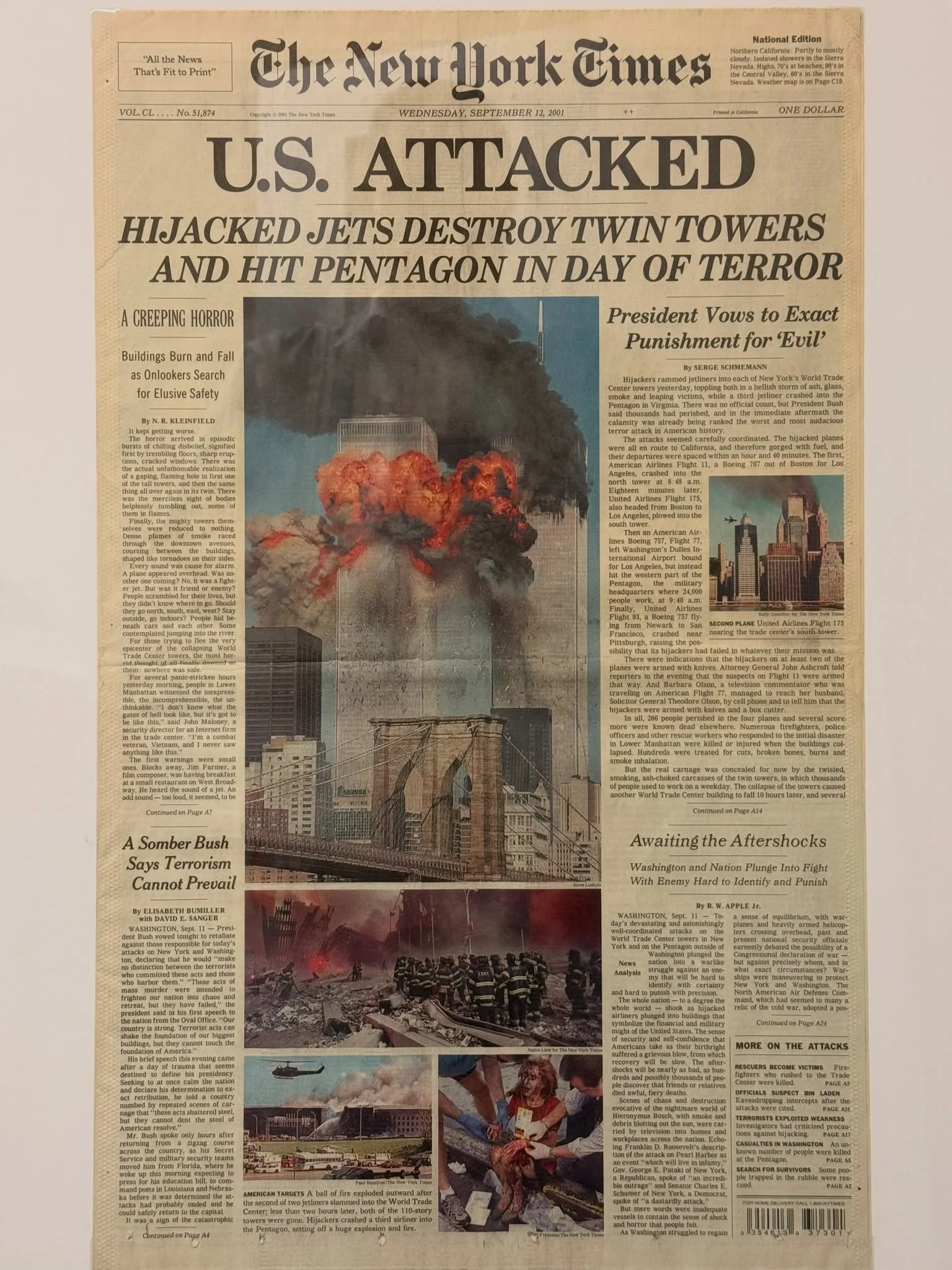
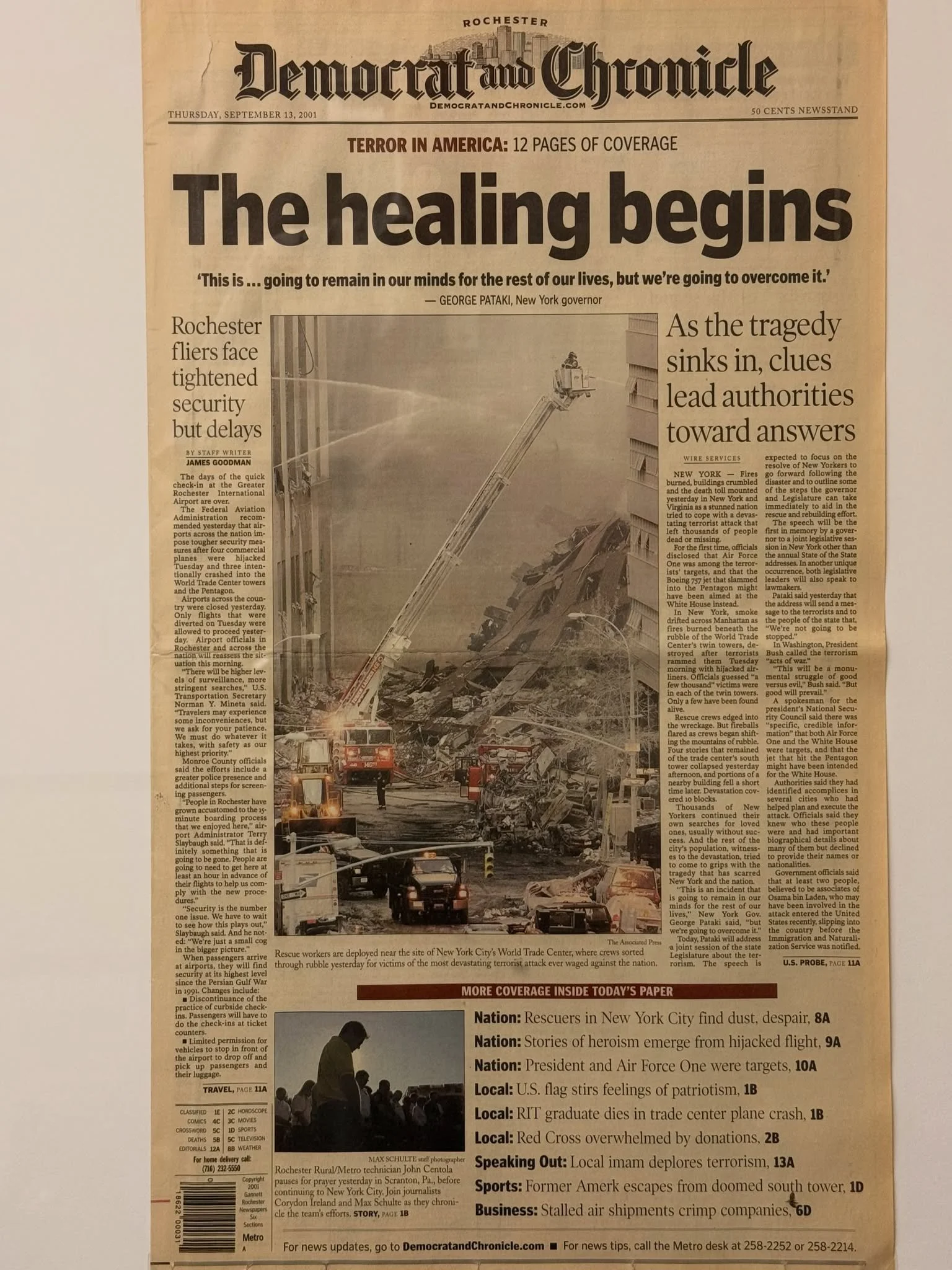
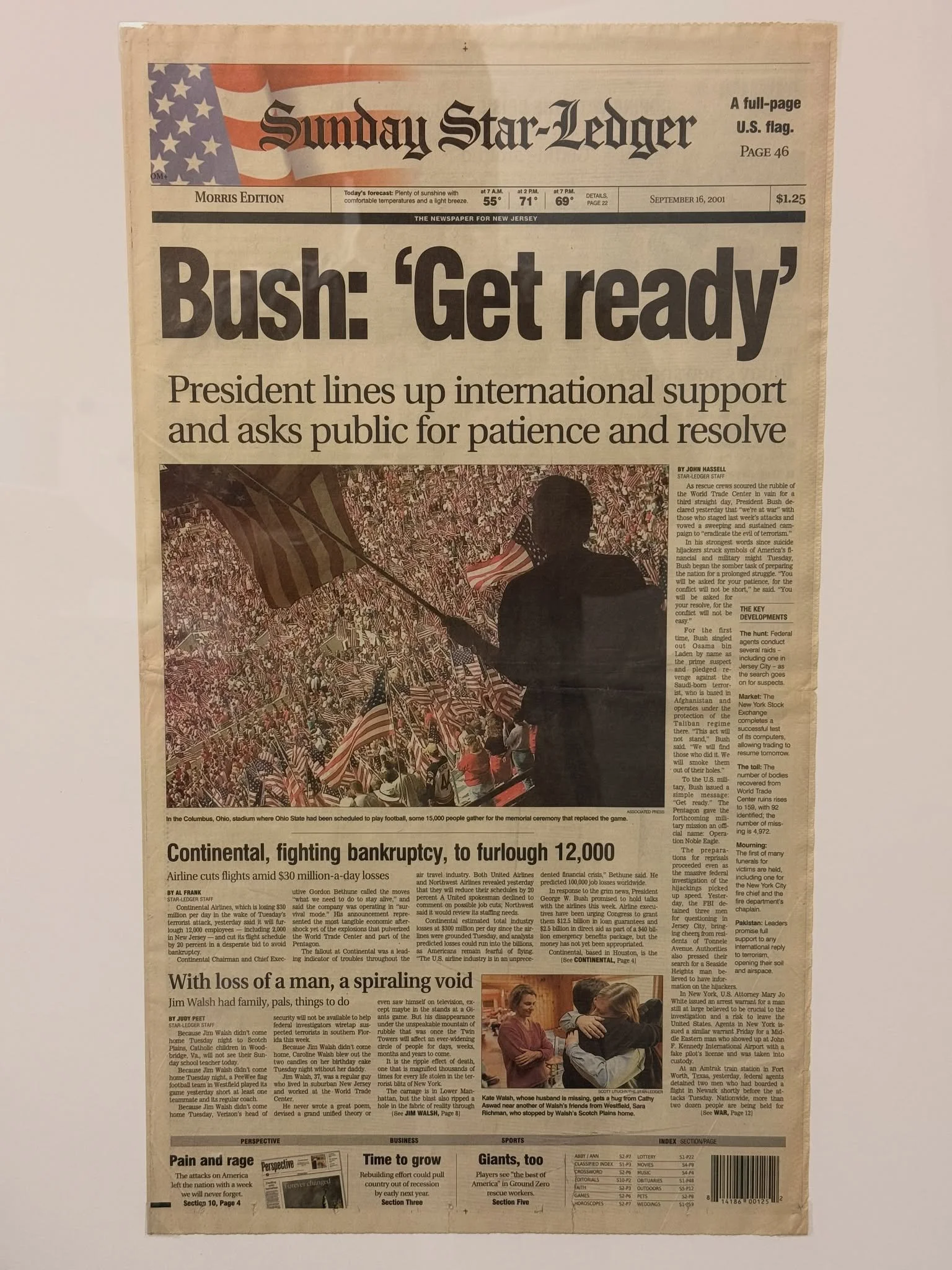
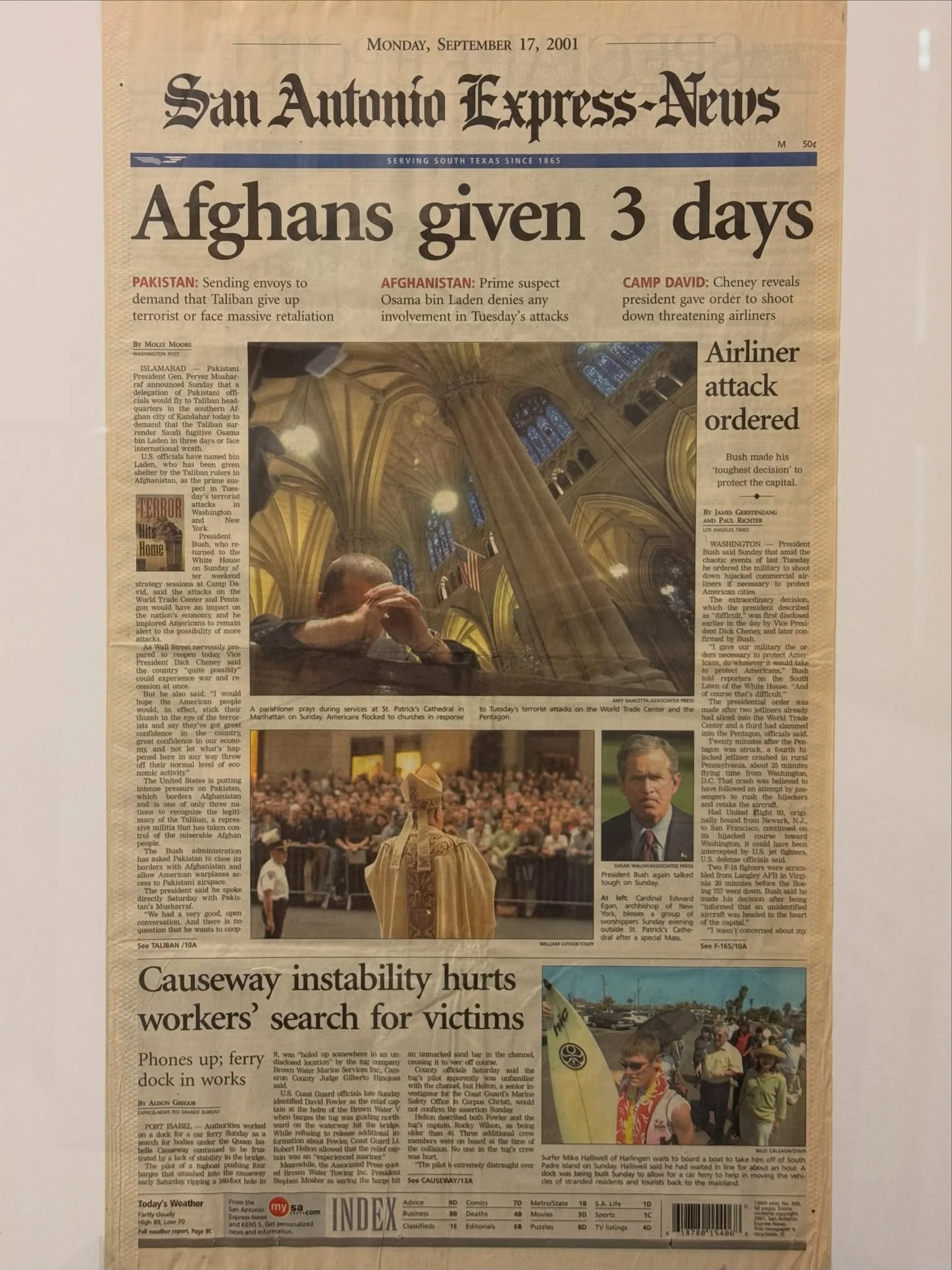
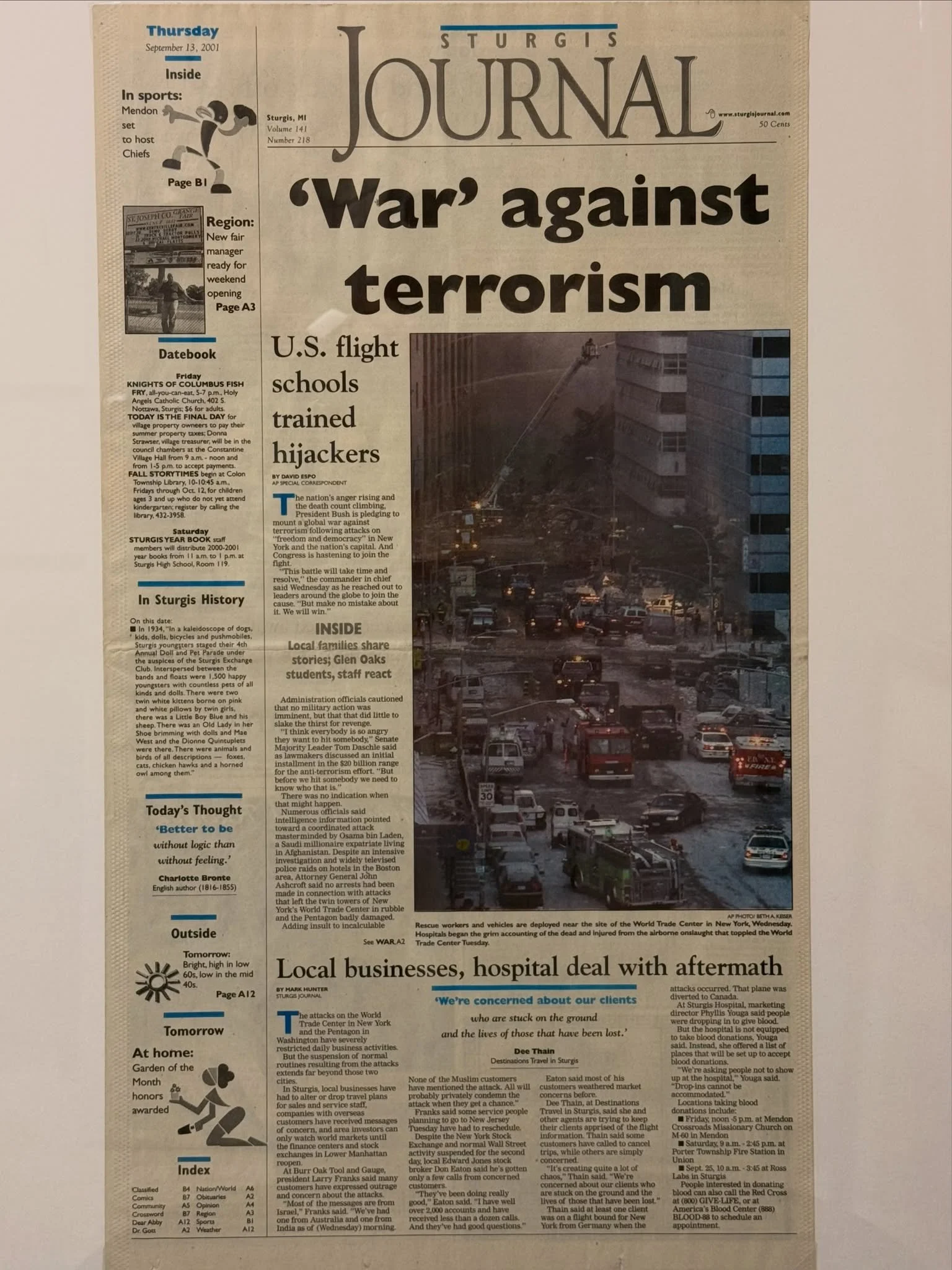
I had no idea how to approach the classroom other than that I knew we were not going to talk about F-stops and shutter speed on the way to school. I stopped at a gas station, and as I paid, I looked down at the newspaper rack and thought about how That Day would live on through the news and how it would help shape our history books.
I thought I was prepared to teach and talk about the projection of history and how photography and video would be used in the future.
Then the first student walked into the classroom and stated that she knew I had a cell phone policy, but she politely asked if she could keep it on because her aunt worked in the South Tower and nobody had heard from her. I explained there were no rules That Day; if she received a call, she could answer it in the classroom or in the hallway, whatever she needed. It was at that point I realized that before we even started talking about photography influence on That Day, we just needed to talk.
Through our discussions, it was decided that as a group we would contact all our friends and family members to collect newspapers over the next seven days and have them shipped to us.
About four weeks later, we assembled a few of the Photo Arts I classes together, and we laid out over 80 newspapers from various cities and countries to reflect. The students had noted how sometimes the same photograph would appear with more contrast or darker to portray the day.
10 years ago, I was unsure if that discussion in the lesson That Day was helpful or not. I contacted many of those freshmen, and we displayed all those newspapers along with a survey on their experience that day. Some of the students stated they remembered absolutely nothing, while others could remember the smell of the classroom.
RIT hosted exhibitions at Gallery R and in the library of the reflections and newspapers. After the exhibitions closed, it was moved to the lobby of the Democrat and Chronicle, where it remained for over a year. This served as